+ 770 years of hisory
+ Garden and terrace
+ Regional, seasonal food
+ Arts & culture
+ 18 rooms, six of them singles
Hotel Chalavaina
A 13th-century house in Val Müstair, where knights once rested their lances before entering the Stube. And where today, you sleep just as well as you eat.
magic

+ 770 years of hisory
+ Garden and terrace
+ Regional, seasonal food
+ Arts & culture
+ 18 rooms, six of them singles
There is something special about Val Müstair, still barely discovered. It feels authentic, almost impossibly beautiful. And there is very little about the Chasa that feels typical or predictable either.


HoteL Chalavaina
A house with a long memory
Its open roof truss is a Tyrolean habit, not what one would expect from a traditional Graubünden house. But then we are close to the border with the Vinschgau, and border regions have a particular magic of their own. They borrow the best from here and there and make something entirely their own.
The house is ancient. It was first documented in 1254, and the moment you step inside, you can feel it. The beams have carried the ceiling for centuries. Today, beneath them, stands a USM Haller reception desk, and behind it Isolde, smiling. She takes us through the house and its history. The beams above the check-in desk, she tells us, are pierced with holes because this was where arriving knights once rested their lances before entering the Stube, as etiquette required.
The rest of the room carries its history just as naturally. A black-and-white handwoven rug from Tessanda, the century-old weaving mill in nearby Santa Maria, highlights the space. Much of what we see comes from the valley.


Hotel Chalavaina
The South Tyrolean way
We don’t wait long that evening to claim the Stube for ourselves. From what we decide is the best seat, taking it all in, the plates arrive one after another – and the proximity of South Tyrol just over the border certainly makes itself felt. Everything we taste is wonderful. The dishes are as colourful as the garden outside the door. We’d already spotted the apricots from the tree outside being preserved in the hallway and waited for them to arrive as dessert, tonight with milk chocolate mousse.
For the tall chef Oliver Thialer, the worktops were raised a few centimetres. He’s at the stove from midday, preparing what’s served so effortlessly by evening. Fine cooking in the old Stube – every bit as grand as it sounds.


The rooms are simply furnished. Our eye lands on a plain wooden cupboard. It fits perfectly, without trying to impress. That says quite a lot about Chasa Chalavaina. This is a house for everyone – for every budget, and especially for those who like a little history with a very good dinner.
Hotel Chalavaina
Mind the beams
The rooms have been renovated with heart, beautiful in their simplicity. The bathrooms are the current project, adding the comfort today’s guests might want. In the smallest single room stands the original 16th-century bed frame, lengthened by a handspan by the carpenter – people were smaller then, and it shows in every corner. The frame is history. The sleep isn’t.
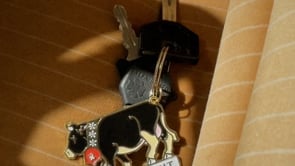
So even if you’re tall, come anyway. Just duck where you must – in what might be Switzerland’s oldest hotel. Follow Isolde as she picks up the cast-iron keys and leads you through the house’s history. The house, the garden, the neighbouring Kloster St. Johann, the village, the valley. It’s more than worth the journey.


Today, the Chasa feels a little like a living museum, though there is nothing static about it. Stories are everywhere. In 1499, freedom fighter Benedikt Fontana stood on this balcony and took the Chasa as his base, holding the position against the Habsburgs. Today you sit on the very same balcony and enjoy life.

The location
In the historic village of Müstair, surrounded by mountain landscapes and close to the Swiss-Italian border, the village offers a peaceful base for exploring the valley.